Soil: Aroid Mix Aeration Ratios
Root health is oxygen dependent. Learn how chunky, coarse substrate matrices prevent anaerobic root rot in plastic and terracotta containers.
Standard retail potting soil is formulated primarily from finely milled peat moss or coco coir. While economical, these fine particles compress tightly over 6 to 12 months of domestic watering. In apartment environments lacking wind and vigorous sun, this compressed mud remains waterlogged, suffocating root hair cells and fostering Pythium and Phytophthora pathogens.
The Proprietary 4:3:2:1 Apartment Aroid Recipe
By blending larger chunks of organic and inorganic elements, you create permanent macropores that hold vital oxygen even when thoroughly wet.
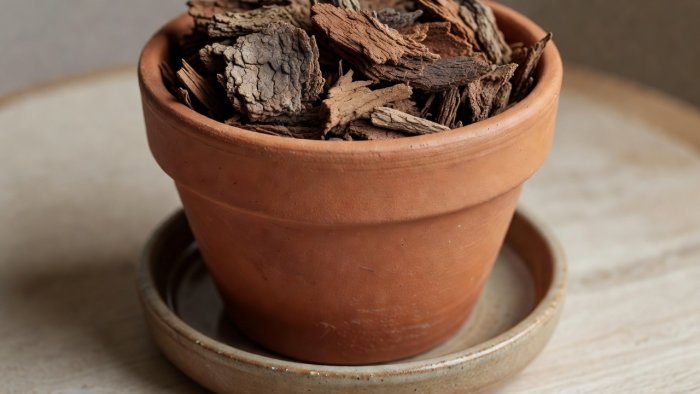
Orchid Pine Bark (Medium Grade)
Provides structural grit and mimics the natural epiphytic tree bark habitats where monstera and philodendron roots cling natively.
Coarse Horticultural Perlite or Pumice
Volcanic stone that never breaks down, creating permanent micro-chimneys for fresh air circulation throughout the pot volume.
Coco Husk Chips & Worm Castings
Supplies slow-release organic humic nutrients while preventing sudden pH acidification.
Horticultural Activated Charcoal
Adsorbs mineral salt build-ups from municipal tap water and discourages stagnant odor-causing bacteria.
Hydration: Moisture Meter Calibration
Standard two-prong analog moisture meters operate via electrical conductivity rather than direct moisture sensing. In soil with high fertilizer mineral salts, a probe may falsely register "Wet" in dry conditions, or "Dry" in reverse if pure distilled water was used. Always pair probe readings with the tactile finger check: insert your index finger two full inches down into the substrate. If the mix feels cold and adheres to skin, irrigation is unnecessary.