Toxicity: ASPCA-Verified Pet Safe Greens
Foliage options that protect furry flatmates from poisonous sap, insoluble oxalates, and digestive distress.
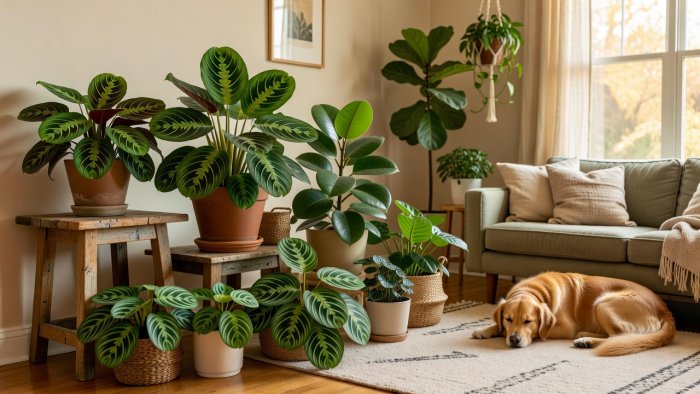
Many classic houseplants—including Dieffenbachia, Monstera, and Philodendron—contain sharp needle-like calcium oxalate crystals (raphides). When chewed by curious cats or dogs, these microscopic crystals embed into oral tissues, provoking acute swelling, excessive drooling, and distress. Fortunately, pet parents can cultivate an expansive tropical oasis without endangering companion animals.
ASPCA Safe vs. Toxic Overview
| Plant Group | Safety Status | Primary Hazard | Recommended Safe Alternative |
|---|---|---|---|
| Philodendron / Monstera | Toxic to Pets | Insoluble Calcium Oxalates | Maranta leuconeura (Prayer Plant) |
| Lilium (True Lilies) | Extremely Lethal to Felines | Acute Renal Failure | Phalaenopsis (Moth Orchid) |
| Sansevieria | Mildly Toxic | Saponin GI Irritants | Haworthiopsis attenuata (Zebra Cactus) |
| Epipremnum (Pothos) | Toxic to Pets | Oral Mucous Membrane Irritation | Peperomia caperata (Ripple Peperomia) |
Pet-Safe Variety Profiles
1. Calathea & Maranta Family (Marantaceae)
Distinguished by geometric patterns and striking magenta undersides, Marantaceae members are completely free from toxic alkaloids and oxalates. They appreciate high indoor humidity and filtered indirect lighting.
2. Peperomia Varieties
From the succulent-like leaves of Peperomia watermelon to the trailing stems of Peperomia prostrata (String of Turtles), the entire genus is verified safe by the ASPCA Animal Poison Control Center.
3. Boston Fern (Nephrolepis exaltata)
Lush, arching fronds that naturally humidify rooms while filtering indoor particulates. Completely non-toxic even if your cat bats at the trailing fronds.